
Greenbelt City Directory Collection Trail
Greenbelt never supported one long commercial directory run. What survives is scattered but real. A handful of confirmed town-directory notices, a deep community newspaper archive, and local-history files at the library carry most of the weight. The line between confirmed and proposed matters here. A verified issue can back a name, address, telephone number, or household note for that year, while a directory that was merely planned is only a lead. Every Greenbelt city directory hit should carry its publication date and its source.
| Collection | Years | Where held | Access |
|---|---|---|---|
| Greenbelt Town Directory, first issue | 1938, February 1 | News Review archive and Tugwell Room | Public scan and library reference; initial blocks D, E, and F only. |
| Town Directory correction and addition notice | 1947 verified issue | News Review PDF and Tugwell Room | Public scan and OCR; names, spouse notation, and phone numbers. |
| Community and telephone directory proposal | 1953 report | News Review archive and Tugwell Room | Public newspaper report; a final printed run is not verified. |
| Greenbelt Cooperator and News Review | 1937 to current, with gaps | News Review archive, library, and Internet Archive | Public PDFs and OCR; inspect the page for errors. |
| Tugwell directory and obituary files | Exact shelf years unpublished | Greenbelt Branch Library | Ask staff for the physical file and local-history help. |
| DeMarr person, place, and newspaper files | Runs vary | Prince George's Historical Society | Free on-site use; Saturday hours and weekday appointments. |
| Federal census schedules | 1940 and 1950 public | NARA, FamilySearch, and library databases | Search household and enumeration geography beside a local entry. |
Not every hoped-for volume exists. No complete Greenbelt reverse or criss-cross run is published online. Ask about a specific volume before assuming its address arrangement is available to you. The 1953 committee report deserves the same care. It records a plan for a fuller resident and community reference, not proof that every proposed booklet survived. Gaps have several possible causes. Absence of a year is not evidence of a move.
Note: A missing Greenbelt city directory year may reflect publication gaps or archive gaps. It may also reflect a different collection arrangement, not a household move.
Greenbelt City Directory Began in Three Blocks
The first confirmed Greenbelt Town Directory appeared February 1, 1938. The Journalistic Club's business committee produced it, with Robert D. Hayes as chair. Reporting at the time described resident names, addresses, and telephone numbers. Coverage was narrow. Only blocks D, E, and F made the first issue. Supplements for blocks A, B, and C were planned. That geography is a vital check. An early Greenbelt city directory entry can be genuine without being citywide.
Publishing later drifted among local groups. A 1947 report says the American Legion received permission to continue the directory. It refers to two earlier town organizations without naming them. In 1953, a committee weighed a new booklet. It was meant to hold residents, city services, businesses, emergency contacts, and civic groups. Towney Scudder, Bruce Bowman, Vane Glendening, and Edward Burgoon were the named organizers. The full publisher-and-year sequence remains a gap.
Greenbelt City Directory Shelves at Two Libraries
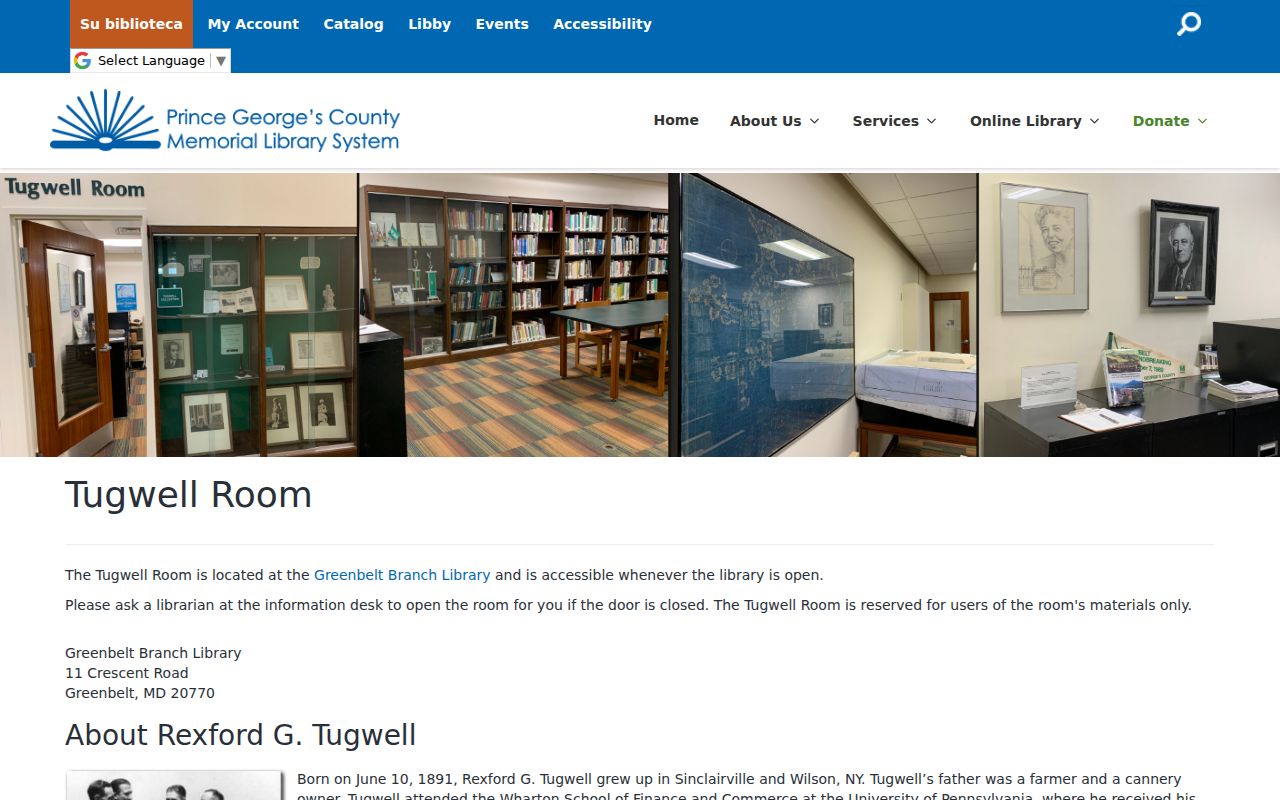
The Tugwell Room at Greenbelt Branch Library is the city-focused stop. Its vertical files hold city directories, obituaries, biographies, place files, maps, oral histories, and Greenbelt planning material. The room also keeps a 1938 map. An aerial photograph dates from about 1941. Blueprints from Greenbelt Homes, Inc. cover 1936 to 1938. Visiting works within branch hours. A researcher can ask for a city-directory file and set an entry beside a map or court-unit reference, and the Tugwell Room source page details the collection and its access.
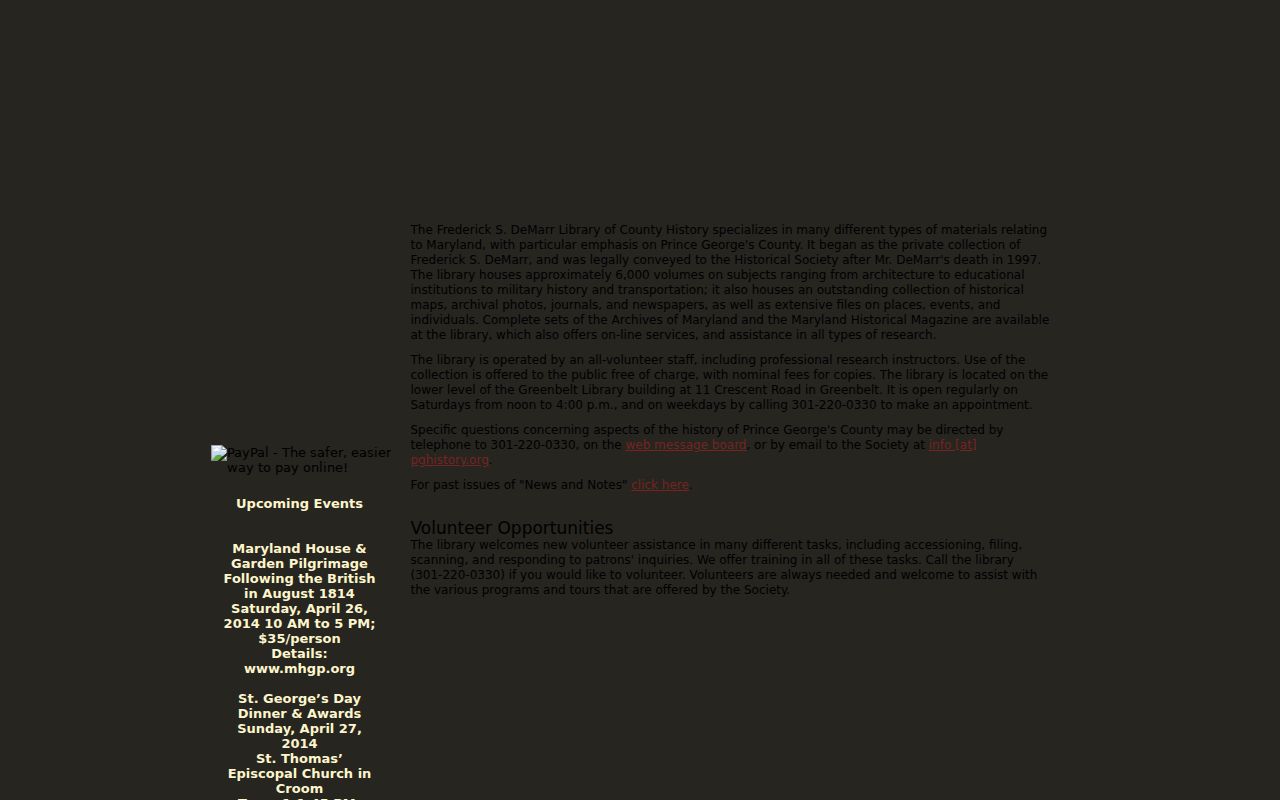
The DeMarr Library of County History sits in the same Greenbelt Branch building. It widens the lens to Prince George's County. Roughly 6,000 volumes await. The collection spans maps, photographs, journals, newspapers, Archives of Maryland, Maryland Historical Magazine, and files on people, places, and events. Public use is free. Saturday hours run noon to four. Weekday visits go through the Historical Society's appointment line. One trip can pair a Greenbelt city directory clue with county maps or a person file, and a Tugwell search can grow a sparse directory hit into a fuller local-history question without claiming an unverified year. The DeMarr Library source page documents those county-history holdings and its on-site access route.
DeMarr is a companion shelf, not a guarantee. Confirm the specific date or title before trusting a trip to a particular Greenbelt volume.
Reading a Greenbelt City Directory Entry
A directory entry is a dated fragment. The 1947 correction notice shows the shape a Greenbelt entry can take: a surname, a given name and middle initial, a spouse in parentheses, and a four-digit telephone number. The 1938 account adds names, addresses, and phones. Neither source establishes occupation, ownership, age, household size, or a present address. Read it as a moment in time. Keep the notice context with the transcription, especially when the result comes from OCR.
| Name form | Record surname, given name, middle initial, and spelling exactly as printed. |
|---|---|
| Household note | A spouse can appear in parentheses, such as the format used in the 1947 correction notice. |
| Telephone | Historic four-digit number in the correction notice; preserve it as a date-bound clue. |
| Address or block | The 1938 account reports addresses and limited blocks; the 1947 excerpt itself does not provide a street address. |
| Publication context | Directory issue, correction notice, or newspaper page shows whether the item is a full entry or an update. |
- Criss-cross directory
- An address-ordered directory that can point from a place to listed occupants. A verified Greenbelt run has not been established, so check each volume first.
- Householder index
- An alphabetical listing organized around a household name rather than a full population list.
- Abbreviation key
- The publisher's explanation of shorthand, usually near the front of a volume. Photograph or transcribe it before interpreting symbols.
Greenbelt City Directories Need the News Review
Greenbelt's newspaper record runs longer than its directory record. The Greenbelt Cooperator began in 1937 and became the News Review in 1954. Some listed issues are missing. Even so, it beats the directory record for continuity. "Our Neighbors" arrived in 1941, and "Hi, Neighbor!" ran from January 30, 1942 through July 1945 with arrivals, departures, and moves. One notice can date a move. Set beside a city-directory entry and a census schedule, the Greenbelt News Review archive and its searchable issue-by-year PDFs can pin down a household change.
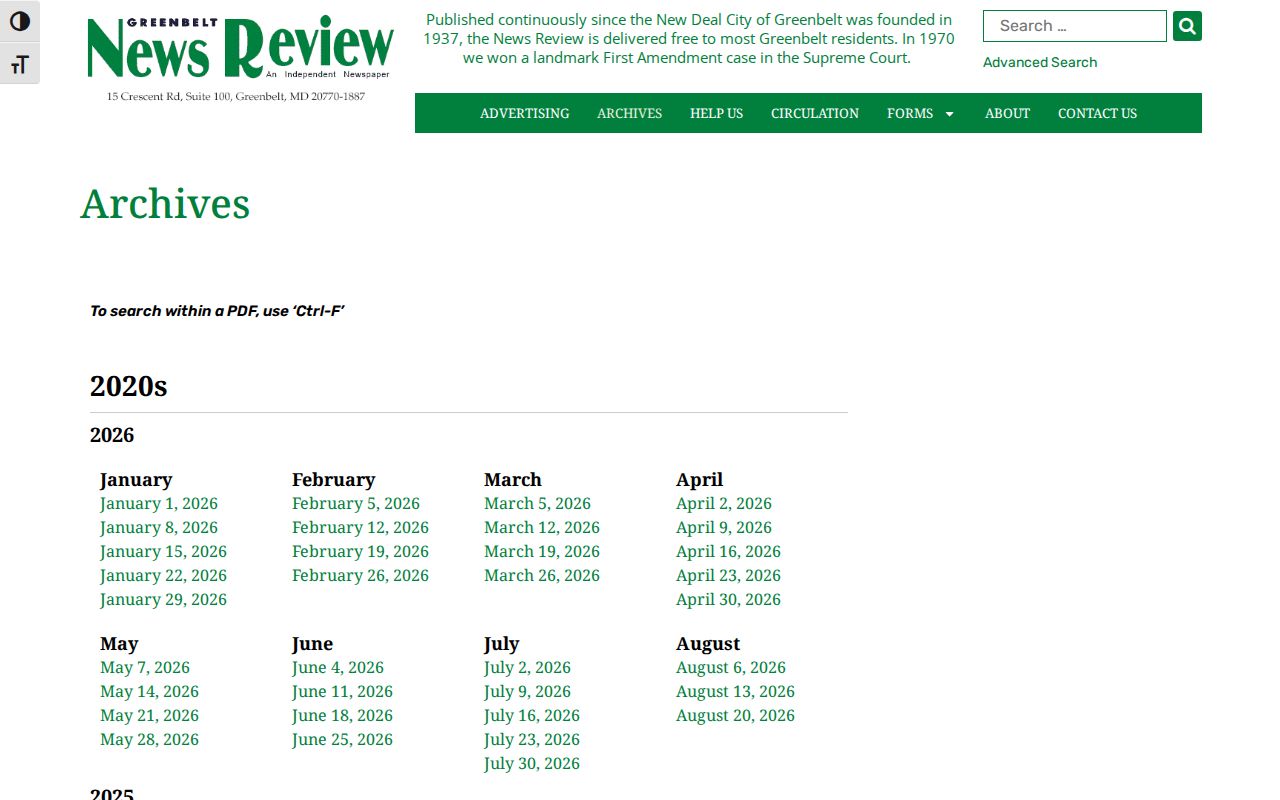
An OCR hit is only a starting point. A highlighted surname on its own can strip away the directory context that gives it meaning. So open the full page and read around it.
Run several searches instead of one. Try the surname alone, then a historic court or unit address, then a year. OCR misreads names, and the archive project says so plainly. Later newspapers also stopped pairing resident names with addresses for privacy reasons. So a blank result proves nothing. The person may still be there.
Note: A newspaper notice can hint at a move or a family tie. A census record, deed, or original directory entry should confirm it on its own.
Greenbelt City Directories Use Court-Unit Clues
Greenbelt began as a planned New Deal community. Its superblocks, interior walkways, and court-oriented addresses do not translate neatly into modern street strings. A historic label in a city directory, newspaper, blueprint, or property record may simply not match today's format. It may simply not match today's format. The archive guidance recommends searching a Greenbelt Homes, Inc. address in court and unit form. When both forms are known, record each one.
A directory search alone cannot bridge that gap. Current parcel and ownership questions belong with the tools on the Greenbelt by street directory. The historical shelf answers a different kind of question. Do not force one form into the other. A map, blueprint, plat, or newspaper page may connect them.
Tracing Greenbelt Households Across City Directories
Trace a household one dated source at a time. The 1940 and 1950 federal population schedules are public under the 72-year rule. They pair well with Greenbelt directory evidence from 1938, 1947, and 1953. Details matter here. Census geography can separate a genuine move from an abbreviated name. A spouse notation, a telephone number, and a court or unit reference can do the same work. They can also expose a simple OCR slip. For a recent identity question, verify any directory clue through the proper official source. Treat it as current proof only after that check.
- Find the surname in a confirmed Greenbelt city directory issue or correction notice and record the date, spelling, household notation, and page.
- Search the next available local issue or News Review year, using a court/unit form as well as the surname.
- Pair the local date with the 1940 or 1950 federal census, then compare household members and enumeration geography.
- Check Tugwell's obituary, people, map, or blueprint files when an address label changes or a person disappears.
- Use a deed or other official record only to test recorded ownership, not to turn an old listing into a claim about present occupancy.
A resident can vanish from a Greenbelt city directory for many reasons. A move, a death, or a different name form can all explain the gap. A missing issue, thin coverage, or a privacy change can too. Nearby newspaper pages and census evidence help sort those possibilities apart. When the task shifts from historical household research to confirming a specific modern record, the Greenbelt resident lookup is the fitting route. That route answers the modern question cleanly.
Greenbelt Directory Record Timeline
Greenbelt's directory history is short but unusually specific. Much of the work that a long commercial directory run would do elsewhere falls to the newspaper and library files here.
- 1937: First residents arrived, and the Greenbelt Cooperator began publication.
- 1938: The Journalistic Club issued the first verified Town Directory for blocks D, E, and F.
- 1947: A correction notice records the local entry style and American Legion publication reference.
- 1953: The Cooperator reported a proposed comprehensive telephone and community directory.
- 1954: The Cooperator became the News Review, whose archive continues with documented gaps.
No complete Greenbelt city directory run or last-print year can be pinned down from these shelves alone. Ask a librarian for the actual years held, then cite the exact issue used.