
Finding Greenbelt Residents by Clue
Narrow facts make Greenbelt resident research easier. An address belongs in the Maryland State Department of Assessments and Taxation, known as SDAT. A recorded transfer belongs in Maryland Land Records, called MDLandRec. A date, a court party, or a full name may fit a different official index. Greenbelt sits inside Prince George's County. Each office holds a separate piece of the record. The City Clerk keeps one. County offices, state agencies, and the Greenbelt Branch Library keep the rest. Two independent fields should agree before a match holds up. A deed party and a legal description make one such pair.
Official records never list households. Property data names only the last recorded owner. A mailing address can differ from the premises address. Protected voters stay out of any open address search. So do utility customers, delivery recipients, and many nonowners. The individual voter route works only as the state permits. For a past Greenbelt household, compare before trusting. Set a directory or newspaper mention beside the dated public record. That comparison is the check.
- Start an address question with SDAT, then save the account number, legal description, and Liber/Folio deed reference.
- Use the state voter lookup only for its individual, identity-based purpose. It is not a street browser.
- Search MDLandRec by grantor or grantee, or jump directly with the book and page from SDAT.
- For an earlier household, ask the Tugwell Room for its city-directory and obituary files, then search the News Review archive.
- When an existing city record is not online, send a specific Maryland Public Information Act request with an address, subject, and date range.
Greenbelt Resident Records Desks
Three desks supply the strongest first records for Greenbelt. SDAT links a parcel to its last recorded deed owner and legal description. The Prince George's County Circuit Court Land Records Division keeps the land-record chain, and its counter is the in-person route when an index or image needs help. The City Clerk is the custodian. City minutes, ordinances, elections, and cemetery matters sit in that office. Elections desks offer a limited individual lookup. After identifying the parcel, continue with the Greenbelt by-street directory for the full address chain.
Prince George's Land Records
14701 Gov. Oden Bowie Drive
Upper Marlboro, MD
301-780-2253
Maryland Land Records
Maryland SDAT Property Search
Prince George's County, code 17
Statewide online service
Address, PAN, and map routes
Real Property Data Search
Prince George's Board of Elections
9400 Peppercorn Place
Largo, MD 20774
County lookup updates weekly
County voter lookup
Greenbelt Address Records in SDAT
Start with SDAT. It is the best Greenbelt residents directory entry point when an address is known. Pick Prince George's County. Street Address, Property Account Identifier, Map Reference, and Property Sales are the search choices. The core search ignores owner names and ZIP codes. Enter a street name without its suffix or directional. If an exact entry fails, drop the number to browse several matches or broaden with the documented wildcard approach, since a mailing line, ZIP, and legal parcel location can describe different things.
| SDAT field | Use for Greenbelt research | Important limit |
|---|---|---|
| Street Address | Find a specific premises or a street segment | Use number and street name, without suffix or directional |
| PAN / account | Return an assessment account after it is known | County code 17 begins the Prince George's identifier |
| Map Reference | Match a parcel to its tax-map reference | Incorporated-town work can need a town code |
| Property Sales | Explore documented sales and subdivision filters | It is not a ZIP or owner-name search |
SDAT property cards show plenty. Expect the premises location, tax mailing address, legal description, values, transfer information, and one or two Liber/Folio references. The owner is not always the resident. The last recorded owner helps a deed search but proves no one lives at the premises.
Greenbelt Parcels Lead to Deeds
A Liber/Folio is a book and page reference. It bridges the property card to the recorded deed. In MDLandRec, select Prince George's County. Search a party as grantor or grantee, or enter Book and Page to jump straight to a known instrument. Name controls range from exact to Soundex. Begins with, contains, and fuzzy sit between them. Read the legal description and the prior-deed language before treating two address references as one parcel. Historic and electronic indexing cover different eras, so an older gap may require the Historical Indices or Jump to New Volume.
The Maryland Land Records search is the official entry point for these instruments. It supports a recorded-title trail, not a roster of everyone at a Greenbelt address.
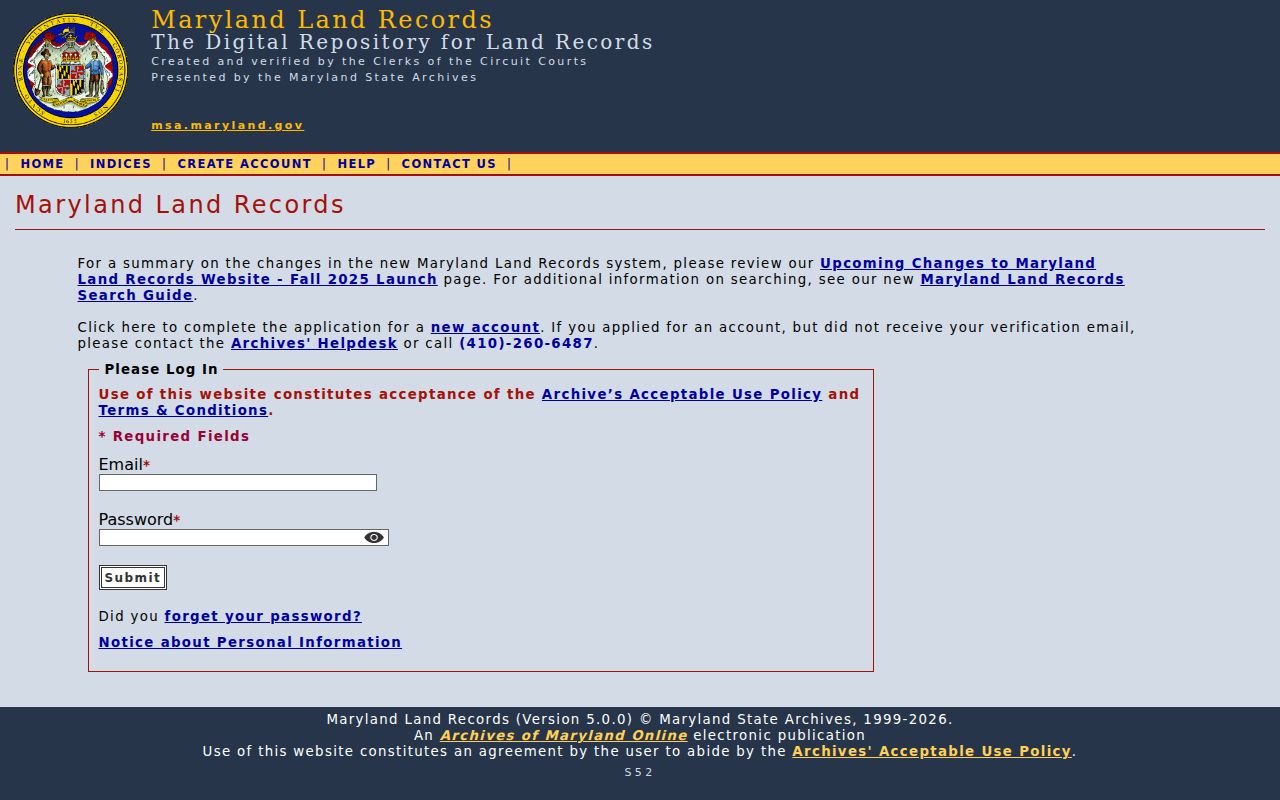
The deed index is where records pay off. Save the party role, instrument, recording date, and book or page before moving to the next document.
- Parcel
- A mapped unit of land identified for assessment and tax purposes.
- Liber/Folio
- The Maryland book and page reference for a recorded land instrument.
- Grantor / grantee
- The party transferring an interest and the party receiving it.
- Legal description
- The lot, block, subdivision, plat, or other land language that identifies the property.
Greenbelt Voter Lookup Boundaries
Maryland Election Law §3-505 opens local voter-registration records to inspection, subject to confidentiality exceptions. The public tools are not a Greenbelt street roster. The state form asks for first name, last name, date of birth, and residential ZIP. It may also use street number and middle initial. It reports daily updates. The Prince George's County form uses date of birth plus ZIP or voter ID. It reports weekly updates. Both routes serve an individual lookup. A mismatch can come down to spelling or an old ZIP. A stubborn mismatch may need the official elections office.
The Maryland voter lookup is where the state's identity fields appear.
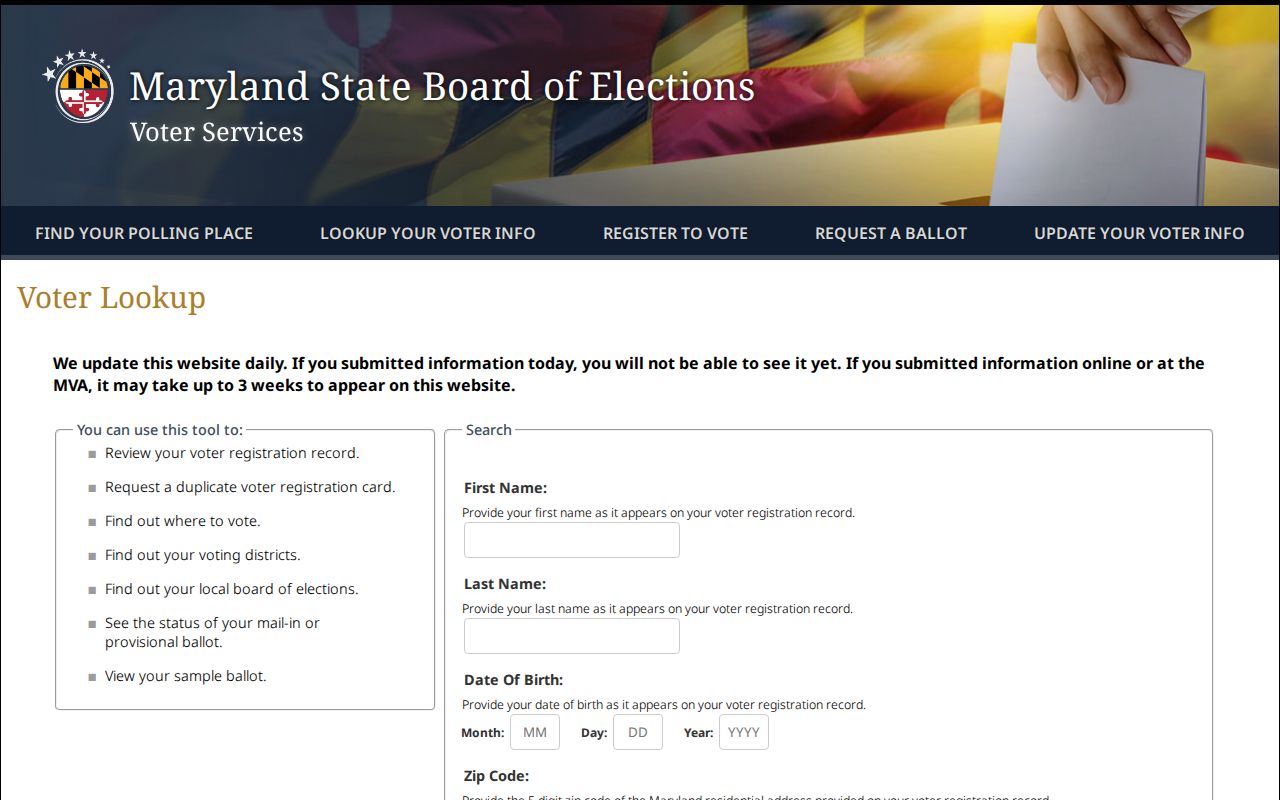
A walking list is different. The State Board requires a formal election-data application, a $75 county fee, and the form's electoral-purpose restrictions for any address-sorted county list.
Greenbelt Court Party Searches
For parties to a case rather than owners of land, the Maryland Judiciary Case Search & Record Portal is the working tool. A name search runs exact by default. The court FAQ permits a percent sign after the first character of a last name. That widens the net when a spelling is uncertain. Each result can show a party role, case number, court, case type, dates, the charge or claim, and a disposition summary. The public portal was reworked on March 14, 2026. That date is a handy marker for anyone confirming current access. Yet a courthouse file still carries more than the online summary does.
State-court fallbacks include Prince George's Circuit Court plus the District Court in Hyattsville and Upper Marlboro. Ask by case number and document type. Adoption, juvenile, certain family, sealed, shielded, medical, and expunged files stay restricted. A case result proves neither a verdict nor a current Greenbelt address.
At the courthouse, the clerk can walk a visitor through inspection and copies. Maryland Courts treats a short inspection effort as generally free of charge. Federal matters run separately through PACER for the U.S. District Court for the District of Maryland. PACER charges $0.10 per page. Most case-specific documents are capped at $3. Fees below a quarterly threshold are waived. When several people share a name, hold onto the court, case number, party role, and filing date as a set.
Greenbelt City Records by Request
The Greenbelt City Clerk maintains city elections, ordinances, minutes, and cemetery duties. Planning and Community Development holds the address-related city material. Either office can be reached through the city's MPIA portal. The portal takes requests, and it also lets visitors browse earlier requests and the documents released in response. Mail, fax, and email to the custodian work too. A good request names the subject. Include an address or name, the record type, and a narrow date range.
The Maryland Public Information Act, General Provisions Article Title 4, gives agencies 30 days to respond. Greenbelt reports that a nonexistent record is flagged within 10 working days. The city will not investigate. It will not build a new list or chase a broad research question for a requester. Note: One address and one tight date range keep the request workable, so avoid asking the custodian to assemble a new resident roster.
Current Greenbelt Resident Sources
No official Greenbelt residents directory lists every household. Each current source answers a narrower question. SDAT covers recorded ownership and parcel facts. A deed index names the parties to recorded instruments, and election records follow their own individual-lookup and formal-request rules. Public association pages list organizations and contacts, not members, so treat every result as a lead and confirm it with the office that holds the record.
| Source | Who It Lists | Keeper | Access |
|---|---|---|---|
| SDAT assessment record | Last recorded owners and parcel facts | Maryland SDAT | Free address, PAN, or map search |
| Individual voter lookup | A person's own registration-related record | State or county elections office | Identity fields required; protected entries excluded |
| MDLandRec index | Grantors, grantees, and recorded instruments | Circuit Court Land Records | Free account and county counter |
| City association inventory | Public association contacts and managers | City of Greenbelt | Free page, not a membership roll |
| City MPIA responses | Existing responsive municipal records | City Clerk / custodian | Portal, mail, fax, or email request |
Match the source to the claim. A parcel record supports recorded ownership. A court summary supports a case identity, and a library file supports an earlier household. The Greenbelt resident lookup keeps these one-person verification steps apart from the address work.
Greenbelt's Three ZIP Geographies
Greenbelt carries three postal designations: 20768, 20770, and 20771. The county municipal list and the state ZIP map tie all three to the city. But they do not mean the same thing. Ordinary street and business delivery belongs to 20770. The 20768 designation is a special or PO-box ZIP, not evidence of a physical parcel. Meanwhile, 20771 serves the Goddard institutional area. For a specific address, USPS is the authority. A parcel town code settles legal location.
The Greenbelt ZIP directory keeps these postal distinctions separate from the street-by-street research path.
Greenbelt Privacy and Corrections
Maryland's Online Data Privacy Act, MODPA, took effect October 1, 2025. It grants consumers rights against covered businesses. Those rights include limiting use or disclosure and opting out of sale or sharing. Consumers can also correct, know about, and delete data, subject to exceptions. It does not erase a public deed, court record, or voter record. Each of those stays with its lawful custodian. A correction or confidentiality request has to follow the rule for that specific record.
The Maryland Safe at Home Address Confidentiality Program supplies a substitute address. It also provides mail forwarding for eligible survivors and threatened people. Election-law confidentiality exceptions and court withholding rules can matter too. Public availability is not permission to merge records into a dossier. It is not permission to expose a protected address.
Greenbelt Official Records Versus Compilations
Commercial people-finder reports blend broker data, public web material, and record extracts. The Federal Trade Commission warns that such reports can be stale. They can also be incomplete, or tied to the wrong person. An official source covers less ground. It names the custodian, the record date, and a path to request a correction. Treat any compilation as a prompt. Verify the fact with the office that created the record.
| Research route | Strength | Limit |
|---|---|---|
| SDAT or MDLandRec | Recorded parcel and instrument facts with date and legal description | Does not establish every occupant or present residence |
| City, court, or Archives custodian | Direct access procedure and copy or inspection route | Some records are exempt, restricted, or only available in person |
| Commercial compilation | May suggest a source or name variation | Can merge people, repeat old data, or omit protected information |
That distinction earns its keep in same-name Greenbelt research. Save the source URL, the date accessed, the exact spelling, the party role, and any uncertainty rather than letting a combined report close the question.
Greenbelt Records Beyond the Web
Websites never tell the whole story. For deeds and land records, the Land Records Division counter welcomes visitors Monday through Friday. Hours run 8:30 to 4:30. Staff will explain how access works. They will not run title searches or hand out legal advice. The Circuit Court Clerk keeps court files, marriage licenses, business licenses, and notary records under one roof. Current vital records flow through MDH, which takes orders by mail, phone, and eligible online routes. Older, unrestricted material belongs to the State Archives, where series-level reference help is available.
Local history lives in two Greenbelt collections. The Greenbelt Branch's Tugwell Room operates during regular branch hours. The DeMarr Library shares the same building and opens its roughly 6,000 volumes, maps, photographs, newspapers, and person-and-place files to the public for free. It offers Saturday hours and weekday appointments. Visiting in person adds context no online name result can match.
Historical Greenbelt Resident Directories
Greenbelt's directory history starts early. A contemporary Cooperator account credits the Journalistic Club's business committee with publishing the first Greenbelt Town Directory. The date was February 1, 1938. That maiden volume listed names, addresses, and telephone numbers, but it only covered blocks D, E, and F at first, with supplements promised for A, B, and C. A 1947 correction notice reveals the entry style of the era: surname, given name or initial, a spouse notation, and a four-digit phone number. A 1953 article describes a proposed community and telephone directory, though no verified surviving final volume exists.
For physical holdings, the Tugwell Room keeps city-directory vertical files alongside obituaries, maps, and local files. The shelf years are not published as a complete run, so ask staff before assuming coverage of a particular decade. Full collection details and reading strategies appear on the Greenbelt city directories page.
Working with a Greenbelt residents directory works best in sequence. Pair a confirmed 1938, 1947, or 1953 local reference with the public 1940 or 1950 federal census. Add an issue of the Cooperator or News Review. That combination separates a genuine move from a changed spelling, a missing issue, or a gap in a directory run. It also guards against a common error: treating an old phone listing as a deed record or a claim of modern residence. The State Archives rounds things out with older vital, church, probate, naturalization, and land indexes, though coverage is series-specific rather than a Greenbelt household list.
Greenbelt's Newspaper Directory Trail
Greenbelt's newspaper archive fills the gap where a complete city-directory series would sit. The Cooperator ran from 1937 to 1954. The News Review continues from 1954 to the present. Pre-2002 paper was scanned for the Archive Project, but the OCR is imperfect. It can miss a surname or split a court-and-unit address. Search a name or the historic Greenbelt Homes address format. Then read the surrounding page rather than trusting a single hit.
The archive also carries "Our Neighbors" columns and the "Hi, Neighbor!" run from 1942 through 1945. This run tracked early arrivals, departures, and moves. Later archives cut back on publishing names and addresses for privacy reasons. The Tugwell Room local-history collection supplies the city-directory and map materials. Those materials support this kind of resident lookup.
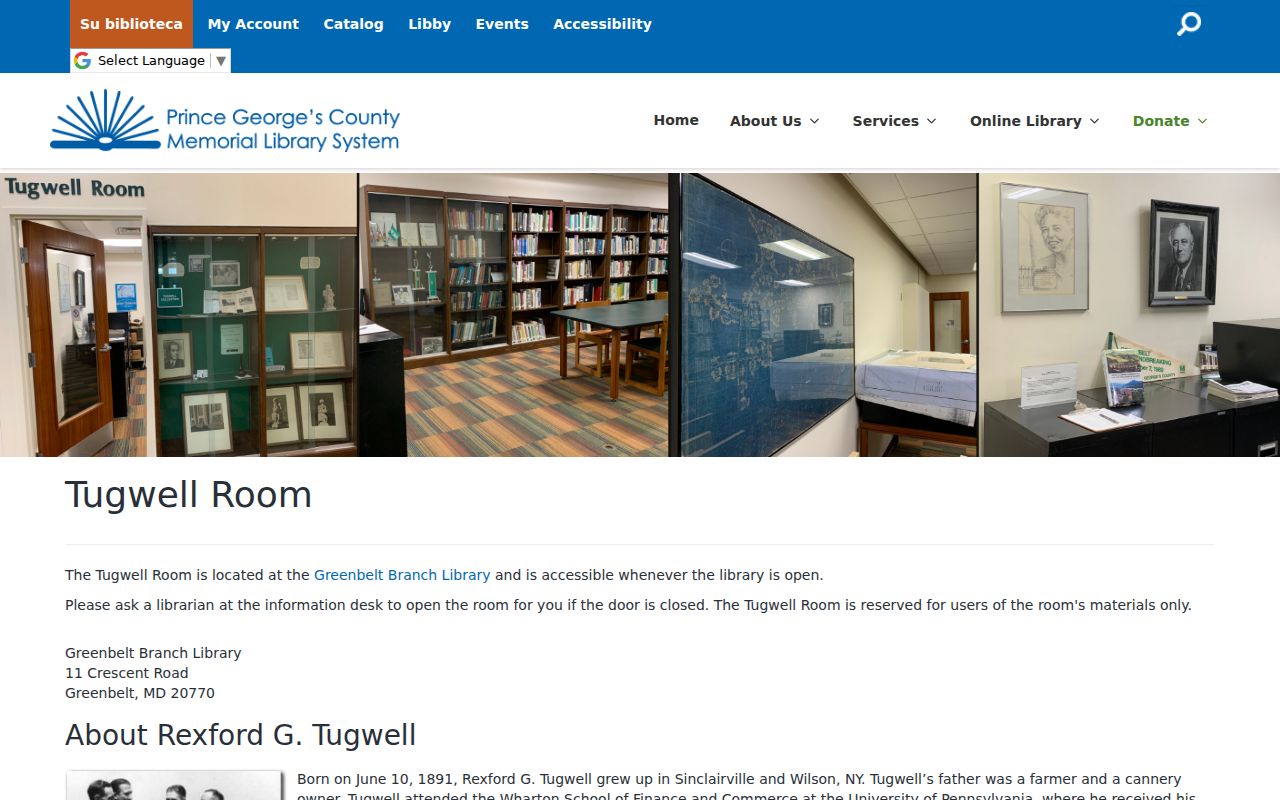
One visit can cover a lot. The Tugwell Room's city-focused files let you pair a directory or newspaper mention with maps, blueprints, and obituary material in a single local-history stop.